As described by Professor Tait during Wednesday's lecture, the traditional American sitcom provides a snippet of story with each episode that ends cleanly at the end of every — normally 30-minute — installment. The episodic structure creates a view-friendly plot line featuring characters that change very little as the seasons progress, allowing people to tune in any time without any prior knowledge of the series and understand what is going on. Additionally, sitcoms tend to produce humorous pieces that are a bit hyperbolic in nature, making for a quick taste of comedic entertainment in a manner not unlike what Easy Listening does as a genre for the music medium.
"That 70's Show," a period sitcom centered around a group of teens growing up in a small town in Wisconsin, delivered such snippets of comedic actions to viewers over the course of its 8 seasons on air. With plot lines that often focus in on exaggerated tales of teenage shenanigans, each episode has a tendency to serve as a skit-like event, linking together in a series that often has very few other common linkages aside. Episodes included the humorous aftermath of an impromptu graffiti session on the side of the local water tower to one of the main character's comical relationship with his stern father and extremely nurturing mother.
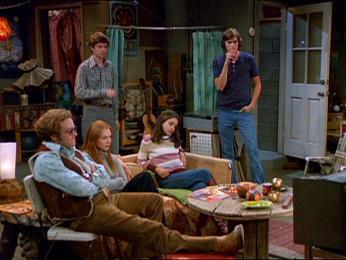
A television-centric stage set-up also provides a classic example of "people watching people watch TV," another aspect of TV sitcoms described during Professor Tait's lecture. The main hangout for the group, character Eric Foreman's basement, features a television set straight out of the '70s that the furniture in the area is arranged around. Characters also consistently gather around it, during which time snippets of comedic dialogue tend to occur.
Additionally, characters in "That 70's Show" undergo little development throughout the series aside from some love-interests that are interwoven across a span of several episodes, creating a viewing experience that is extremely accessible to anyone looking for a little entertainment.
Image courtesy of fanpop.com.
Monday, October 25, 2010
Sunday, October 17, 2010
Shots and Angles in Modern Film
The final piece of the X-Men movie series that premiered in 2000, "X-Men 3: The Last Stand" was composed of a majority of high-action shots with memorable usage of special effects as two groups of "mutated" humans entered into a battle for control and the fate of the human race. While the intensity and sheer amount of action sequences the occurred throughout the film may at a glance appear to live little room for the more subtle usage of camera angles and shots, even here the techniques Professor Ramirez-Berg described in lecture are present. Within a single scene in the movie, three appear, as show in depth below:
"X-Men 3: The Last Stand" movie stills courtesy of: Screencap Paradise
As X-Men member Shadowcat (Ellen Page) flees from her attacker, the Brotherhood's Juggernaut (Vinnie Jones), much power is lent to the mammoth man's character, as his main feature is his unnatural strength and power to the point where he is smashing walls behind those that she runs through (her defining ability being able to pass through objects) during the chase. A sudden turn of the tables occurs as both of them suddenly sink into the floor however. It is here where an ironic use of the low-angle shot occurs. Usually meant to signify a character's power, here it takes a sarcastic look at a character that is usually incredibly powerful throughout the series as, though the viewer feels as if he or she is looking up at the Juggernaut, the expression of struggle on his face takes away that power thanks to the pairing of close-up shot that helps reveal the emotions there.
There is then a shift to a medium shot that reinforces the Juggernaut's loss of power, as he is now stuck in the floor. A movement from the low-angle shot to the eye-level shot also emphasizes that he is losing control of the situation in question.
Finally, through reverse-order shot progression, the viewer is able to gain the details of who has gained the power that the Juggernaut has lost. Another usage of the low-angle shot, this time more literal in meaning, gives the strength to Shadowcat as she stands over her would-be assailant.
It is these subtle usages of shot and angle within the film that send messages to viewers that would otherwise be lost from live-to-film translation.
"X-Men 3: The Last Stand" movie stills courtesy of: Screencap Paradise
Sunday, October 10, 2010
Star Works
In a time known as the "golden age" of Hollywood industry, when iconic actors and actresses like Humphrey Bogart and Judy Garland were still lighting up screens across the nation, a hierarchy of powerful film studios rose to the top, producing countless films and, among them, the classics still watched and remembered today. A look behind the curtain of these studios, however, reveals the complex and carefully structured process that brought to life the movies that marked the Classical Era.
One of the most essential parts of the Hollywood movie machine was a factory-based, vertically integrated system that gave studios complete control over every step of the movie-making process, from production to the actual screenings. As detailed during lecture, each studio possessed, for example, its own "stable" of actors and actresses to fill the roles for movies to be produced as well as directors, producers, and more. This, in turn, created a team of dependable artists available to be put onto the production of any movie necessary, whenever was necessary. In addition, as certain stable actors and actresses rose to fame, so, too, would the studios whose movies they would appear in.
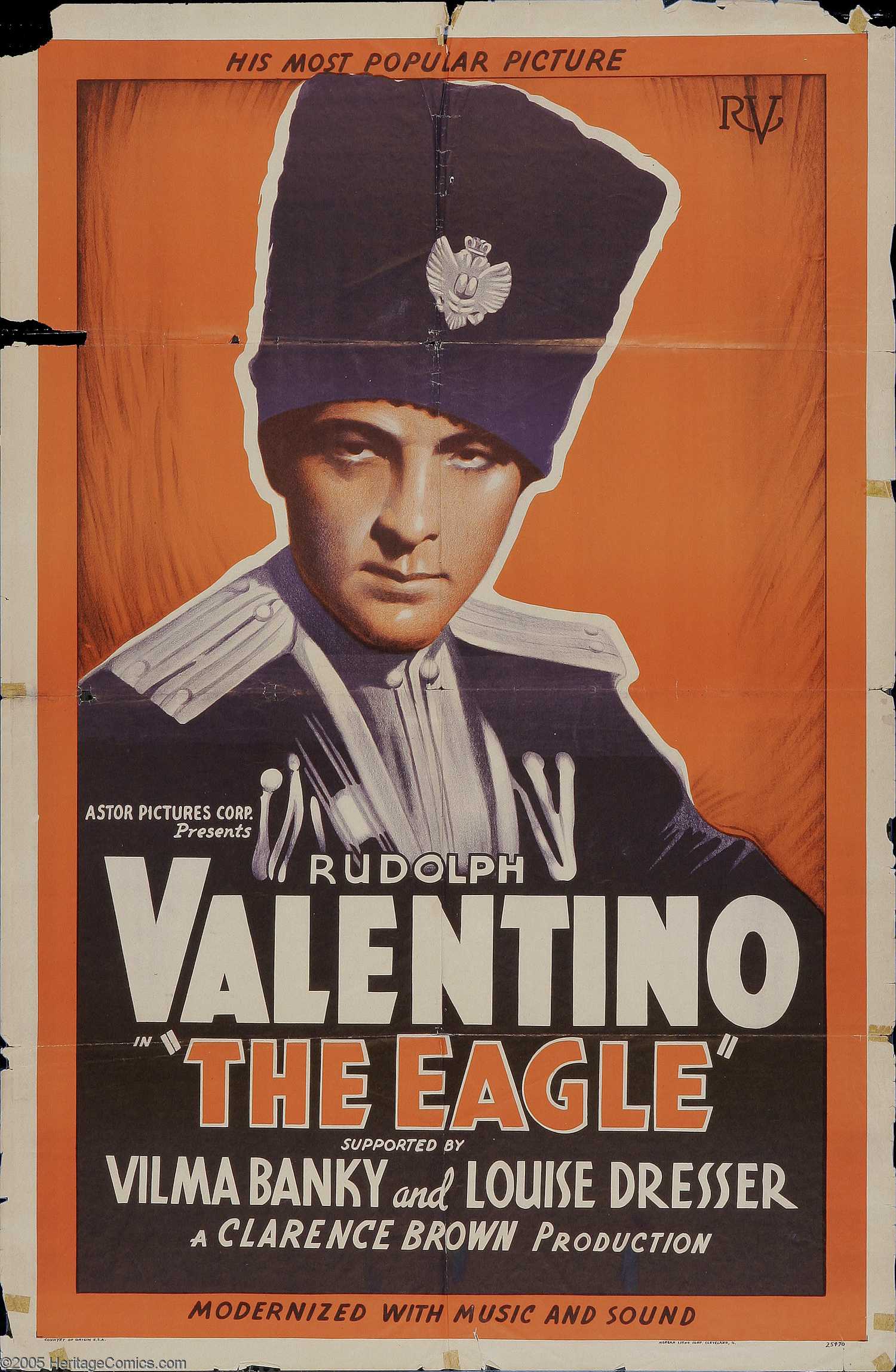
One such example of the power of the "stable" of actors, known as the star system, appears in "Media Now" is Rudolph Valentino, who rocketed to fame following his starring role in the romance, "The Sheik." Following his iconic role in the movie, Paramount Pictures found that his fans, a majority of which were female, were interesting in viewing movies they perhaps normally wouldn't be, simply becuase he was in them. This, in turn, led to the placement of the starring actor's name being given even more prominence than even the title of the actual movie itself, as can be seen in the movie posters for one of Valentino's later films, "The Eagle."
The end result left studios focusing on promoting the star power of its actors and actresses in order to lend the companies their success. After all, by emphasizing a popular actor or actress as opposed to the title of the movie, profits could be boosted by a wave of that artist's fans coming in to view the movie.
One of the most essential parts of the Hollywood movie machine was a factory-based, vertically integrated system that gave studios complete control over every step of the movie-making process, from production to the actual screenings. As detailed during lecture, each studio possessed, for example, its own "stable" of actors and actresses to fill the roles for movies to be produced as well as directors, producers, and more. This, in turn, created a team of dependable artists available to be put onto the production of any movie necessary, whenever was necessary. In addition, as certain stable actors and actresses rose to fame, so, too, would the studios whose movies they would appear in.
The end result left studios focusing on promoting the star power of its actors and actresses in order to lend the companies their success. After all, by emphasizing a popular actor or actress as opposed to the title of the movie, profits could be boosted by a wave of that artist's fans coming in to view the movie.
Sunday, October 3, 2010
All Family ... All Humor?
"All in the Family," a family-based comedy that first aired in 1971, according to IMDB, brought controversial issues from racism to sexuality to the forefront through the day-to-day interactions between infamously bigoted head of the household Archie Bunker and the other members of his family. Though met with a wide variety of both acclaim and criticism, the show remained an enduring part of American television history, remaining on air for 8 years and winning honors from Emmys to Academy Awards.
Since the times of "All in the Family," however, the content and types of shows to be broadcasted around the nation have changed greatly, though family-based comedies still exist. One particular comedy, "Two and a Half Men," follows the lives of a womanizing bachelor, his brother, and his brother's son, who have all found themselves living in the same beach-front home thanks to a messy divorce.
At a glance, these shows vary greatly: though relatives, the Harpers of "Two and Half Men" hold none of the familiar structure that "All in the Family" does, with the Bunkers consisting of a man, his wife, his daughter, and her husband. Simultaneously, there is much less focus on the concept of family tolerance and acceptance that occurs in the contemporary show as opposed to the classic one. However, both feature two strongly opinionated male leads, who serve as the leaders of their respective households. Charlie, the bachelor, is the owner of the house in which his brother and nephew are staying, and Archie is both the husband, father, and father-in-law to the other members of the house. Both address issues in society through characters intended to be bigoted, but with a charming quality, when one observes the insults gilded in humorous quip that make up many of these characters' lines.
One of the biggest differences, however, occurs in the variety of topics addressed. According to a list of episode summaries available online, "All in the Family" addresses a variety of topics ranging from homosexuality, as was featured in the episode that was screened in class, to others from rape to religion. "Two and a Half Men," however, seems to focus almost solely on what has been criticized as portraying women in a negative light, as many of the actresses who appear on the show are either manipulative, overtly sexual, or simply insane.
Both shows, however, do address controversial issues by containing characters who seem to be strong supporters of bigotry, and have found a receptive audience and fan following -- something evident in the long life of "All in the Family" and of "Two and a Half Men," currently in its eighth season.
Since the times of "All in the Family," however, the content and types of shows to be broadcasted around the nation have changed greatly, though family-based comedies still exist. One particular comedy, "Two and a Half Men," follows the lives of a womanizing bachelor, his brother, and his brother's son, who have all found themselves living in the same beach-front home thanks to a messy divorce.
At a glance, these shows vary greatly: though relatives, the Harpers of "Two and Half Men" hold none of the familiar structure that "All in the Family" does, with the Bunkers consisting of a man, his wife, his daughter, and her husband. Simultaneously, there is much less focus on the concept of family tolerance and acceptance that occurs in the contemporary show as opposed to the classic one. However, both feature two strongly opinionated male leads, who serve as the leaders of their respective households. Charlie, the bachelor, is the owner of the house in which his brother and nephew are staying, and Archie is both the husband, father, and father-in-law to the other members of the house. Both address issues in society through characters intended to be bigoted, but with a charming quality, when one observes the insults gilded in humorous quip that make up many of these characters' lines.
One of the biggest differences, however, occurs in the variety of topics addressed. According to a list of episode summaries available online, "All in the Family" addresses a variety of topics ranging from homosexuality, as was featured in the episode that was screened in class, to others from rape to religion. "Two and a Half Men," however, seems to focus almost solely on what has been criticized as portraying women in a negative light, as many of the actresses who appear on the show are either manipulative, overtly sexual, or simply insane.
Both shows, however, do address controversial issues by containing characters who seem to be strong supporters of bigotry, and have found a receptive audience and fan following -- something evident in the long life of "All in the Family" and of "Two and a Half Men," currently in its eighth season.
Sunday, September 26, 2010
Demand in the Design
The early 20th century marked a turning point in American media history, as both technological advances and the determination of new, innovative uses for it created a medium that rose to dominance during the 1920s: radio. What was originally an advancement of a communication form already in existence, morse code, grew and developed into the "Radio Music Box" originally conceived by David Sarnoff, as described in "Media Now." In turn, its convenient nature allowed it to become a household object, and thus spread its popularity across the nation.
Technological advancement as a driving force finds its foundations in the concept of innovation in general. By creating more efficient and more advanced means of carrying out the motions of everyday life, these things gain popularity within social spheres. Originally, the radio was considered to be a "wireless telegraph" when it was first invented in 1896 by Guglielmo Marconi. Intended to further mobilize the telegraph system, it allowed radio stations to broadcast and receive messages from ships at sea that were beyond the reach of the usual wires. However, what began as a technological advancement for morse code as a means of relaying messages gained technological advances of its own — De Forest's vacuum tube that allowed for sounds like music to be broadcast, for example — that allowed it to become its own medium.
Once the technology had blossomed into full development, Sarnoff's idea helped radios find their way into American homes. From there, what the technological advancement that had brought into the spotlight triggered a chain reaction of events that, set off by those original sparks of innovation, allowed radio to become so influential during the '20s. The concept of entertainment embedded with commercials as a source of funding led to the music, shows and variety that piqued the public interest. Soon the demand of the audience led to the need for supplying more radios and more radio content, thus allowing it to rocket to the powerful influence it held during that era.
Technological advancement as a driving force finds its foundations in the concept of innovation in general. By creating more efficient and more advanced means of carrying out the motions of everyday life, these things gain popularity within social spheres. Originally, the radio was considered to be a "wireless telegraph" when it was first invented in 1896 by Guglielmo Marconi. Intended to further mobilize the telegraph system, it allowed radio stations to broadcast and receive messages from ships at sea that were beyond the reach of the usual wires. However, what began as a technological advancement for morse code as a means of relaying messages gained technological advances of its own — De Forest's vacuum tube that allowed for sounds like music to be broadcast, for example — that allowed it to become its own medium.
Once the technology had blossomed into full development, Sarnoff's idea helped radios find their way into American homes. From there, what the technological advancement that had brought into the spotlight triggered a chain reaction of events that, set off by those original sparks of innovation, allowed radio to become so influential during the '20s. The concept of entertainment embedded with commercials as a source of funding led to the music, shows and variety that piqued the public interest. Soon the demand of the audience led to the need for supplying more radios and more radio content, thus allowing it to rocket to the powerful influence it held during that era.
Sunday, September 19, 2010
MTV and the Cultivation of Stereotypes
The widespread significance mass media holds in modern life has become, to a recognizable degree, an influencing factor in the thoughts and opinions of not just the U.S., but also of societies across the globe. It has raised concerns for some, possibilities for others and neutrality on other accounts. Above all, the attention it has received from its importance has garnered interest into the inner workings of the influence it exerts on populations and the individuals that comprise it.
With these theories on the science behind the media in mind, one can approach phenomena in news and in everyday life from several varying angles, in a hope to better understand the full power of the forces behind it. One such concept, known as cultivation theory, can be applied, for example, to a late 2009 dispute between members of the Italian-American community and popular television station, MTV, that received coverage from several news sources.
The idea behind cultivation is this: people with strong exposure to certain mediums like television are more likely to view the scenarios and situations depicted within it as commonplace and, perhaps most significantly, as reality.
An article appeared on FOXNews.com last November, in which MTV reality show, Jersey Shore, came into accusations of depicting Italian-Americans in a negative light and encouraging Americans to stereotype the group as a whole. The story featured two national Italian-American organizations, UNICO National and the National Italian American Foundation, both of which were seeking the cancellation of the show.
In his interview with the news organization, UNICO National President Andre DiMino, expressed his dissent with MTV's decision to air the show despite the concerns that came out during the program's promotional phase: "They're trying to sweep it under the rug, this very outward and blatant stereotyping that they're advocating. I'm going to determine what our next steps are going to be. We just can't remain silent. We've lived through 'The Sopranos' when we were all gangsters and thugs, and now we're being portrayed as buffoons."
The concept behind the concerns of these groups becomes clearer when the cultivation theory is incorporated into the mix: it would mean that, once Jersey Shore became widespread, Americans would apply the concept of spray-tanned, party-loving, self-proclaimed "guidos" to all Italian-Americans, and as a result damaging the reputation of the group. A commercial for the show can be viewed below:
This is explored further in another story that appeared in TIME in December of last year. In it, the opinion of English professor Gina Barreca, who worked on a series of essays examining the portrayal of Italian-Americans in HBO's The Sopranos. She stated that the "Guido subculture," as it is referred to in TIME, that is featured on Jersey Shore is "a celebration of ignorance.
As likely obvious from its current large viewership, Jersey Shore is still being aired, and has even entered into its second season. While, at this point, opinions on whether or not the show has actually caused a negative impact on the nation's image of Italian-Americans are still greatly varied, it is clear that the concerns that were and are still being raised as well as the idea of the "nation's image" itself can be explained and better understood through the concept of cultivation theory.
Sunday, September 12, 2010
Stories into the Spotlight: Agenda Setting in the Media
One of the concepts of the relationship between media and society that caught my attention was agenda setting. Through understanding the meaning of this as a link between media coverage and the public opinion, it allowed me to better assess a story that had caught on to much popularity for a short time over the summer: a dispute between Bill O'Reilly and Jennifer Aniston. By being introduced to the concept of agenda setting, I was provided with information for a better understanding of something that confused me with the amount of coverage and attention it received.
Agenda setting, at its core, is defined as the action taken, consciously or subconsciously, by a person or group that has the power to influence the public agenda and the topics that are considered important at a certain period in time. "Media Now" details this concept, stating that in the political sphere, for example, well-covered candidates and other figures may push to the forefront topics that they find important, or in some cases useful to their cause, prompting more on the subject to appear in both the media and everyday life. The converse is also possible, due to the inevitable fact that the media, as a body with a finite number of stories that can be covered on a day-to-day basis, has the power to select which concepts and events take prominence for that day, week, season and beyond.
This concept of the media selecting what stories will be featured and, in turn, talked about and regarded with importance, brings to mind a week in early August where a media member — or, truly, a group — initiated what seemed to be a chain reaction of stories covering a singular event and topic for discussion. While this certainly cannot be regarded as the only instance of the media bringing an instance that would've otherwise been overlooked into the spotlight, it was one that struck me as somewhat odd: the short fascination with something of a dispute between Bill O'Reilly and actress Jennifer Aniston.
It began as O'Reilly showed a clip on his FOX News show of a recent interview with Aniston over her upcoming movie in which she plays a single woman who chooses to have a child on her own using artificial insemination. In the interview, she states that times are changing and that there is no reason why a woman wishing to have a child should have to have a man in her life. He responded to this clip by declaring, among other things, that her message is "destructive to our society." This brought much more attention to both himself and the promotional interview Aniston was featured in, and as a result, things snowballed further as pop culture news sources among other news channels began focusing in on this with the angle that a feud was occurring between them, with headlines often featuring how his comments "slam" hers, and, when she was later asked about his words, hers as "shooting" back at him.
What began as a single, small interview as a promotion for a film suddenly became a story that was covered on dozens of celebrity blogs and news channels, one of which is shown below as a still from CNN's take on the incident, courtesy of the HLN channel on YouTube:
While this has no political ties, the concept of agenda setting does seem to help explain what exactly happened in this case. The main focus of many stations covering the argument appeared to be about Aniston and O'Reilly disagreeing, and less about what they were actually disagreeing about. However, further into these stories it comes to light that the coverage of the argument between them drew a lot of attention to the role of men in modern families, as well as on pregnancy and childrearing in single women and teenaged girls.
It began as O'Reilly showed a clip on his FOX News show of a recent interview with Aniston over her upcoming movie in which she plays a single woman who chooses to have a child on her own using artificial insemination. In the interview, she states that times are changing and that there is no reason why a woman wishing to have a child should have to have a man in her life. He responded to this clip by declaring, among other things, that her message is "destructive to our society." This brought much more attention to both himself and the promotional interview Aniston was featured in, and as a result, things snowballed further as pop culture news sources among other news channels began focusing in on this with the angle that a feud was occurring between them, with headlines often featuring how his comments "slam" hers, and, when she was later asked about his words, hers as "shooting" back at him.
What began as a single, small interview as a promotion for a film suddenly became a story that was covered on dozens of celebrity blogs and news channels, one of which is shown below as a still from CNN's take on the incident, courtesy of the HLN channel on YouTube:
While this has no political ties, the concept of agenda setting does seem to help explain what exactly happened in this case. The main focus of many stations covering the argument appeared to be about Aniston and O'Reilly disagreeing, and less about what they were actually disagreeing about. However, further into these stories it comes to light that the coverage of the argument between them drew a lot of attention to the role of men in modern families, as well as on pregnancy and childrearing in single women and teenaged girls.
Subscribe to:
Posts (Atom)